
Here's the thing about performance anxiety
It's not about whether your partner wants you. It's about their brain telling them they're doing it wrong. And the harder they try to "perform" correctly, the worse it gets. Arousal shuts down. Everything tightens. Nothing feels good for either of you.
The cycle is brutal: they feel like they're failing, so you feel pressured to reassure them, which makes the sex about managing their emotions instead of experiencing your own pleasure. Everyone ends up resentful.
A clitoral vibrator like the Lem rewires this entire dynamic. Here's why, and exactly how to introduce it without making things worse.
Why performance anxiety sinks arousal (and how vibrators help)
Performance anxiety triggers the sympathetic nervous system. Your partner's body floods with cortisol instead of the relaxation chemicals they need to stay aroused. Their brain is literally in threat mode, focused on outcomes ("Am I doing this right?") instead of sensation ("What does this feel like?").
When you introduce a lemon sexual toy into the mix, the focal point shifts. Suddenly the vibrator is "working," not your partner. This tiny reframe does enormous psychological work.
Instead of your partner feeling like they need to generate your pleasure, they get to witness it. They get to contribute without carrying the full weight of the outcome. The pressure moves from "perform perfectly" to "participate in this thing we're both enjoying."
Research on couples therapy shows that shifting responsibility away from one partner's body can actually deepen intimacy. When performance pressure drops, genuine connection rises.
The conversation before you bring it up
Don't surprise them with a vibrator mid-sex. That's a script for a shame spiral.
Pick a calm moment, outside the bedroom, when you're both relaxed. Here's how I'd frame it.
"I've noticed that sometimes you seem stressed during sex, and I want you to know that's not on you to fix. I want us both to feel good. I've been thinking about trying a vibrator, not because anything's wrong, but because I think it could actually take some pressure off both of us. What do you think?"
Notice what's in that sentence: you're naming the anxiety without blame, you're owning your own pleasure, and you're inviting collaboration. You're not saying "you can't make me come." You're saying "let's try something that feels good for both of us."
If they resist, listen to why. Common fears: "It means I'm not enough," "It feels emasculating," "I don't know how to use it." These are real, and they deserve a real answer.
"I want you in this with me. It's not about replacing you. It's about us both relaxing." Full stop.
The first time: step by step
Start with foreplay. Kiss, touch, build arousal the normal way. Let them feel your body responding to them. This is important. They need to know their touch still matters.
When things are heating up, you introduce the lemon clitoral vibrator. Not as a fix. As a "I want to try this."
"Want to try something together?" Low pressure. Collaborative.
Start at a low pattern. The Lem has multiple settings, so begin at 1 or 2. Your partner can hold it, or you can. Either works, but if they hold it initially, they feel more agency. They're doing something, not being displaced.
Focus on sensation, not outcome. The entire point here is to take orgasm off the table as a metric of success. "We're just seeing what this feels like" is the only goal.
If they get anxious or distracted, pause. Don't push. "This feels good. Let's just take our time." The vibrator isn't a band-aid on deeper issues. It's a tool for a calmer conversation between two bodies.
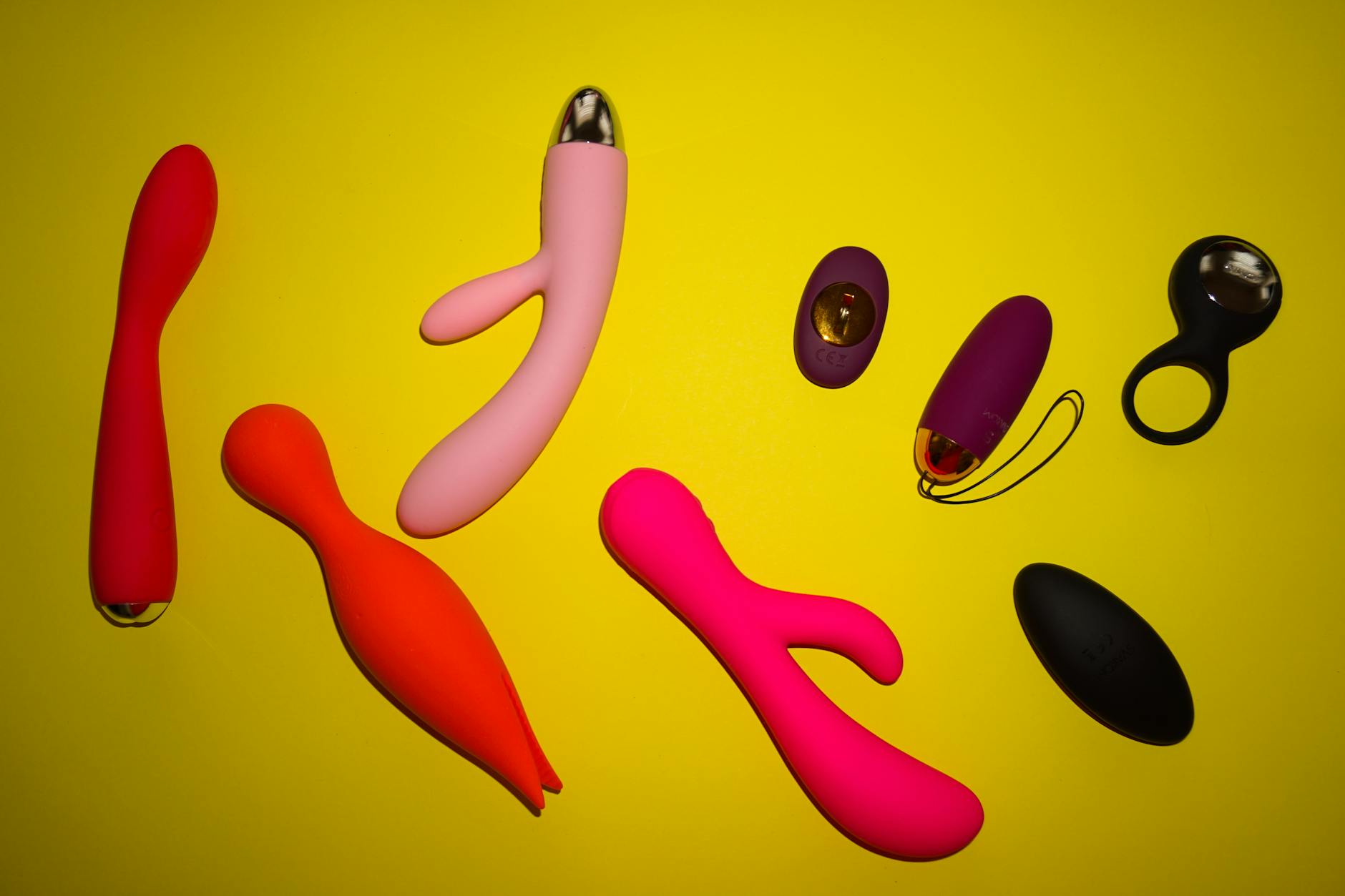
Photo by FounderTips on Pexels
What changes when they see you respond
This is the magic part. When your partner watches you experience pleasure from something you introduced, their brain recalibrates. They're not the one who failed to generate the pleasure. They're witnessing it happen. They might even be facilitating it.
For partners with performance anxiety, this distinction is everything. Witnessing your arousal and orgasm is inherently less pressurized than being solely responsible for creating it.
Many people I work with report that this is when the anxiety starts to actually lift. Not because the vibrator "fixed" anything, but because the dynamic shifted from "outcome dependent" to "sensation focused."
Your pleasure becomes visible, which paradoxically makes your partner more relaxed. They can see it working. They can see you wanting them. That's genuinely reassuring in a way that "you're fine" never is.
The longer conversation underneath
Here's what a vibrator can't do: it can't address the root of performance anxiety, which is usually some blend of learned pressure, past rejection, or cultural messaging about what sex should look like.
If performance anxiety is chronic and affecting both your lives, therapy makes sense. Not because something is broken. But because a good couples therapist can help your partner untangle why they tied their worth to sexual performance in the first place.
Sex therapy or Gottman-trained couples counseling can be transformative here. A professional can help you both understand that arousal is cooperative, not competitive. That pleasure is something you create together, not something one person generates for another.
In the meantime, a lemon clitoral vibrator is genuinely useful scaffolding. It gives you both permission to relax.
Keeping it sustainable
Don't treat the vibrator as a permanent workaround. Use it to create space. In that space, actually talk about what anxiety is coming up for them.
"What are you feeling when you start to get in your head?" "What would help you stay present?" "Do you feel pressured by anything specific?"
These conversations are where the real healing happens. The vibrator is just the tool that makes the conversation possible.
Over time, as your partner's nervous system settles during sex, they'll need less external scaffolding. Some people find they want to keep using a lemon vibrator anyway, which is great. Others drift back toward penetrative sex once the pressure has lifted. Both are fine.
The point isn't vibrator dependency. The point is reclaiming pleasure as something mutual and low-stakes.
When to know if this is working
You'll notice a few things if the dynamic is actually shifting.
Your partner initiates more. They seem less tense during sex. They ask questions like "What would feel good for you?" instead of getting stuck in performance mode. They're playful instead of rigid.
You'll feel less responsible for their confidence. Sex stops being something you manage and starts being something you experience.
If after a few weeks of trying, the anxiety is still paralyzing, that's your signal to bring in professional support. A therapist who works with couples can teach your partner actual nervous system regulation tools.
But for many partners, the combination of a clitoral vibrator and a honest conversation is enough to crack open some space. And in that space, real intimacy can actually happen.
People also ask
Will a vibrator make my partner feel less needed?
Not if you frame it right. The conversation is "I want us both to feel good," not "you're not enough." When your partner watches you experience pleasure they're part of creating, most feel more secure, not less. You're including them in something that feels good, not excluding them.
Can I use a lemon vibrator if my partner is uncomfortable with toys?
Not usefully, no. If there's genuine discomfort, introducing something against their wishes will backfire. Instead, ask what the discomfort is rooted in. Is it shame? A belief about what "real" sex should be? Fear of being replaced? Once you understand the actual concern, you can address it. Many partners become comfortable over time once they understand the tool isn't replacing them.
What if my partner wants to use it but still gets anxious?
Pause. Breathe. Remind both of you that this is about sensation, not outcome. Lower the intensity. Focus on non-genital touch. Sometimes anxiety needs time to settle, and that's okay. You're retraining a nervous system, not fixing a mechanical problem. It takes patience.
How do I bring this up without hurting their feelings?
Own your own desire. "I want to explore this" lands differently than "you can't make me come." You're not pointing out a failure. You're expressing curiosity. Frame it as collaborative, not corrective. And pick a calm moment, not mid-conflict or mid-intimacy.
Is it normal for men to feel threatened by clitoral vibrators?
Yes, unfortunately. Cultural messaging tells men their penis should be enough, which creates a false binary. A lemon clitoral vibrator isn't a competitor. It's a tool that lets your partner relax. Once they see that you're more present and aroused because of less pressure on them, most men get it. Reframe it: the vibrator is helping you both enjoy sex more, together.
Should we use the vibrator every time we have sex?
No. Introduce it, use it a few times, then experiment without it. The goal is to rebuild confidence and lower pressure, not create dependency. Once your partner's nervous system has settled around sex, they might not need it as much. That's actually the sign it's working.
The real shift
Performance anxiety in relationships usually comes down to one person carrying the emotional load of making sex work. A lemon clitoral vibrator doesn't fix that load. But it does redistribute it. Suddenly, pleasure is something you're building together, not something one person is responsible for generating.
When your partner can relax into being a participant instead of a performer, everything changes. Their arousal comes back. Your pleasure becomes more visible. The sex becomes actually pleasurable instead of stressful for both of you.
That's the real win here. Not the vibrator itself. But the permission it gives both of you to stop performing and start actually feeling.
If this resonates and you'd like to talk through your specific dynamic, reach out to Hello Nancy. There's no shame in asking for support.
Sources
Gottman, J. M., & Silver, N. (2015). The seven principles for making marriage work. Harmony.
Meston, C. M., & Frohlich, P. F. (2000). The neurobiology of sexual function. Archives of General Psychiatry, 57(11), 1012–1030.
Perelman, M. A. (2006). A new combination of systemic sex therapy prescribed sildenafil in treatment of men with erectile dysfunction and their partners: Specific aspects of the approach. Journal of Sex & Marital Therapy, 31(5), 390–410.