Penetrative sex hurts. Not every time, maybe. But enough that you're avoiding it or dreading it. And now you're stuck in that awful loop where anticipating pain makes everything tighter, which makes the pain worse, which makes you want to avoid it more.
When penetration becomes painful, couples often do one of two things. They either stop having sex altogether (which erodes connection), or they white-knuckle through it (which teaches your nervous system that sex equals pain). Neither option preserves the pleasure.
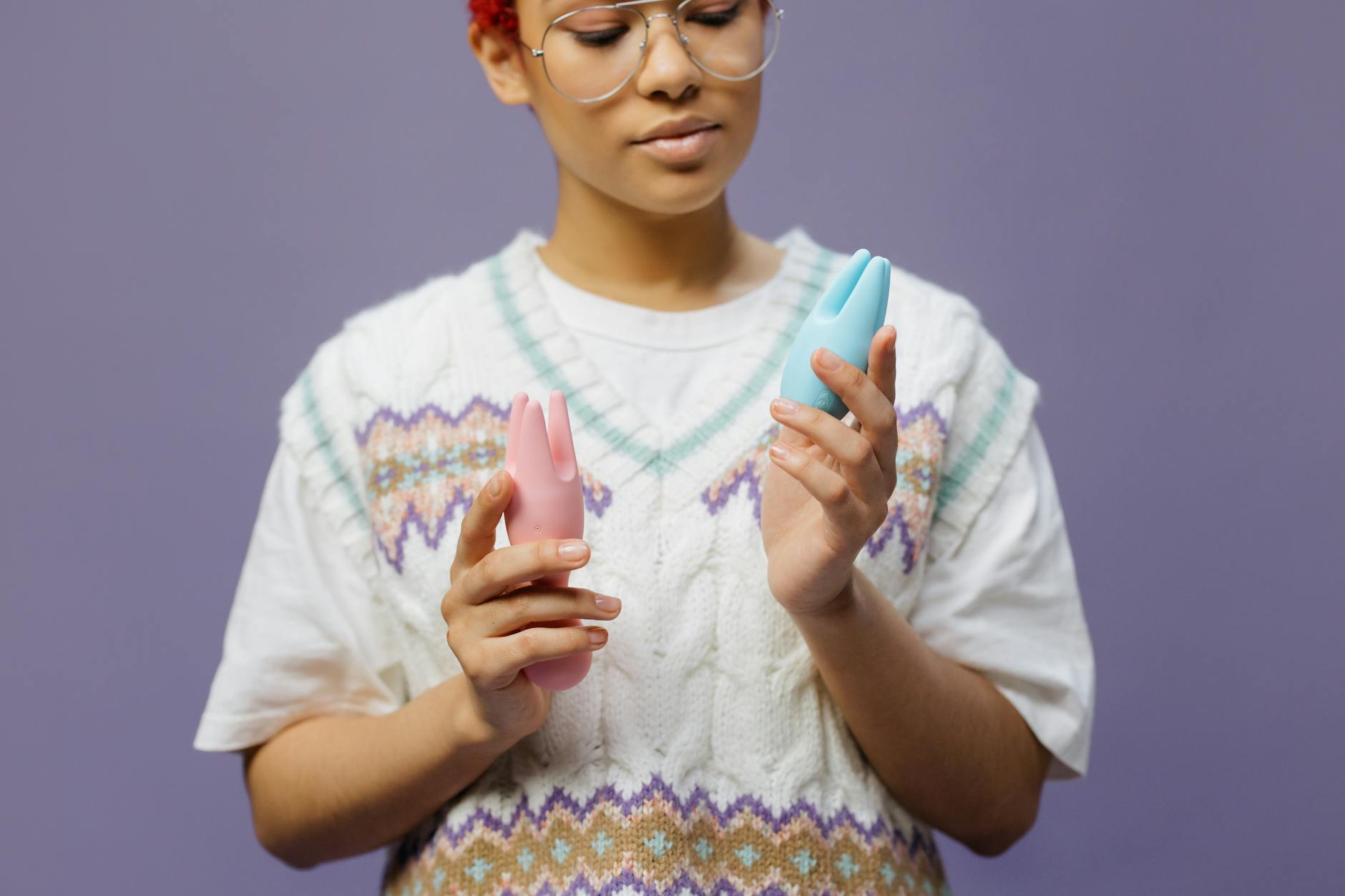
What works is this: move the center of gravity from penetration to clitoral stimulation. The lemon clitoral vibrator becomes your actual main event, not a warm-up.
This isn't a workaround. It's an upgrade. About 70% of people with vulvas require clitoral stimulation to orgasm during partnered sex anyway. Penetrative pain just forces you to be honest about that earlier than most couples get there.
Understanding where discomfort shows up helps you plan around it.
Shallow penetration pain hits near the opening. This usually signals pelvic floor tension or not enough arousal time. The lemon vibrator helps because it's doing the heavy lifting on arousal, so your body relaxes.
Deep pain flares at the back. This can mean the angle is wrong, you need a smaller partner, or there's an underlying condition (endometriosis, pelvic inflammatory disease). If deep pain is your pattern, talk to a gynaecologist before assuming it's just position.
Pressure pain feels like persistent discomfort even without thrusting. This often points to pelvic floor dysfunction. A vibrator helps here too, but pairing it with pelvic floor relaxation work (not Kegels, the opposite of Kegels) makes the real difference.
Here's the frame I recommend to couples: penetration becomes optional pleasure, not required pleasure. The main course is clitoral stimulation. Penetration is the side dish, only if and when it feels good.
Start with 15-20 minutes of foreplay before any penetration talk even enters the room. Use the lemon vibrator at patterns 2-4, building slowly. Your nervous system needs time to register safety. When you're genuinely aroused (not just willing), tissues expand, pelvic floor relaxes, and pain risk drops significantly.
Once you're comfortable, your partner can try penetration. But here's the shift: they don't do it instead of the vibrator. They do it alongside it.
Position the lemon clitoral vibrator so you can use it while your partner is inside you. This requires either you holding it or them holding it, depending on what feels manageable. The vibrator stays in place, and penetration is slow and shallow at first.
If pain flares, pause penetration. Keep the vibrator going. Your partner stays still. You don't have to choose between pleasure and partnership. You can have both.
Clitoral vibrators work differently than other toys because of how they're designed. The lemon uses air-suction technology, which creates a gentle seal without the direct friction that can feel raw or overwhelming when tissues are already tender.
More importantly, it gives you total control. You decide the intensity, the exact spot, the pattern. In a scenario where pain has made you lose confidence in penetrative sex, that control is everything. It reminds your body what pleasure actually feels like.
Many couples report that using a lemon clitoral vibrator during sex actually makes penetration feel better when it does happen. Why? Because you're genuinely aroused and relaxed, not just "going along with it." And because you have a back-pocket source of pleasure that makes you less dependent on penetration feeling a certain way.
If penetration never feels okay, that's fine. You've already found what does. Some people and partners never return to penetration, and that's a perfectly legitimate path. The vibrator becomes your primary tool, and both partners adjust.
This setup only works if you and your partner are actually talking about it. Not just once, but as it's happening.
"That felt good" is useful. "That made me tense up" is more useful. Your partner needs to know whether to go slower, stay still, shift angle, or stop entirely. They're not a mind reader. And you're not failing by needing to give directions.
If your partner resists using a vibrator because it feels threatening, that's a separate conversation from the pain. It's worth having, but it's about their insecurity, not your body being broken. (Spoiler: your body isn't broken.)
Set boundaries in advance. Maybe penetration is only okay in a specific position. Maybe it's only okay after 25 minutes of vibrator use. Maybe it's only okay twice a week. These aren't restrictions. They're the conditions under which you can actually relax.
If pain has been consistent for more than a few months, see a gynaecologist. Conditions like vaginismus (involuntary pelvic floor clenching), endometriosis, or pelvic inflammatory disease require clinical attention, not just a different toy.
A pelvic floor physical therapist is also worth your money. They can teach you how to actually relax your pelvic floor, which is harder than it sounds and transforms everything else you try.
If the pain is new and coincided with a medication change, birth control adjustment, or hormonal shift, mention that to your doctor. Sometimes the fix is straightforward.
Pain during sex does something to your psyche. It makes you anxious about sex. Anxious bodies tense up. Tense bodies feel more pain. That's the cycle.
Using a clitoral vibrator like the lemon while you're rebuilding trust in penetration serves a psychological function too. It reminds you that your body can feel good. That pleasure is still available, even if it looks different than you expected.
Some people need a few months of mostly-vibrator sex before they even want to try penetration again. That's not a step backward. That's you listening to your nervous system.
Your partner needs to get on board with this timeline. If they're impatient, if they're making you feel broken, that's worth addressing in couple's therapy or with a coach. Your pleasure matters as much as theirs. Actually, in this case, your pleasure matters more because the pain is yours.
If penetrative sex has been painful for a long time, you might benefit from naming it explicitly: "Okay, we're starting over. Penetration is off the table for the next month. We're rebuilding from scratch, starting with what actually feels good."
This sounds restrictive. It's actually liberating. Nobody's performing. Nobody's white-knuckling. You're both discovering what works.
Start with the vibrator. Add touch. Add kissing. Add whatever builds arousal without the pressure of penetration happening. After a month, check in. Do you want to try penetration? Has pain improved? Are you curious? If not, no pressure.
Many couples find that this reset actually strengthens their sex life because they stop rushing and start paying attention.
Yes, but gently. Vaginismus is involuntary pelvic floor clenching, so you want to avoid anything that triggers more tension. Start with the lemon at the lowest pattern, externally only. As your nervous system calms down, you can gradually explore higher patterns. Pairing this with pelvic floor physical therapy makes the most difference.
This is a confidence thing, not a vibrator thing. A good partner understands that clitoral vibrators unlock pleasure that benefits both of you. If your partner sees it as competition, that's worth a conversation with a therapist. Their insecurity isn't your problem to solve by avoiding pleasure.
Not abnormal. Pain teaches your body to expect pain. Using the vibrator every time tells your nervous system that sex is safe and pleasurable. Over months, you might need it less. Or you might not. Both are fine. The goal isn't to eventually not need it. The goal is to have sex that doesn't hurt.
Yes, but the timeline is unpredictable. Some people need three months. Some need a year. The key is not forcing it. If you're using the vibrator, feeling pleasure, and gradually exploring penetration when you want to, most people's pain response does soften. But some people discover that penetration just isn't for them, and that's equally valid.
Always. Even if natural lubrication is fine, extra lubrication reduces friction and makes everything feel better. Water-based is safest with silicone toys. Reapply as needed. Lubrication isn't a sign of failure. It's comfort.
Often it's both. Pain is real regardless of the cause. A gynaecologist rules out physical conditions. A therapist helps with any anxiety layers. The vibrator works on both fronts: it reminds your body that pleasure is possible, and it addresses the physical sensation directly.
Most couples who start using clitoral vibrators because of penetrative pain report that their overall sex life improves. Not because the pain magically vanishes, but because they stop making sex about one specific thing. Pleasure becomes expansive again.
Your body isn't broken. The setup you were using was just wrong for you. The lemon clitoral vibrator helps you find what's right. That's not settling. That's winning.
Ready to explore what actually feels good? Start the conversation with your partner. Check out our FAQs for more specifics, or reach out if you'd like to talk through your situation.