
Here's the thing about partner anxiety
Introducing a lemon vibrator to partnered sex rarely fails because of the toy itself. It fails because someone hasn't said out loud what they're actually worried about. Usually it's one of three things: "Will they think I don't enjoy them anymore?" "Will they feel replaced?" "What if they say no and I feel rejected?" None of those questions are about the vibrator. They're about safety, desirability, and vulnerability. That distinction changes everything.
If you're reading this because you want to bring a lemon clitoral vibrator into your shared pleasure but the anxiety is stopping you, you're not broken. This is genuinely hard. And it's also totally doable if you approach it like a conversation, not a confession.
The real reason partner anxiety shows up
Let me be direct: toys don't threaten established partnerships. But unspoken expectations do. If your partner has never heard that you want different stimulation, that clitoral pleasure matters more than penetration, or that you're curious about how your body responds to air-suction technology, then a lemon vibrator appearing in the bedroom reads as a sudden plot twist. Of course there's anxiety.
Most of the couples I work with who struggle with toy introduction never actually talked about pleasure beforehand. They had sex, sure. But they didn't sit down and say "Here's what feels good to me" or "I want to explore this together." The vibrator becomes the scapegoat for a conversation that should have happened years earlier.
This is fixable. It just requires you to lead with the conversation, not the toy.
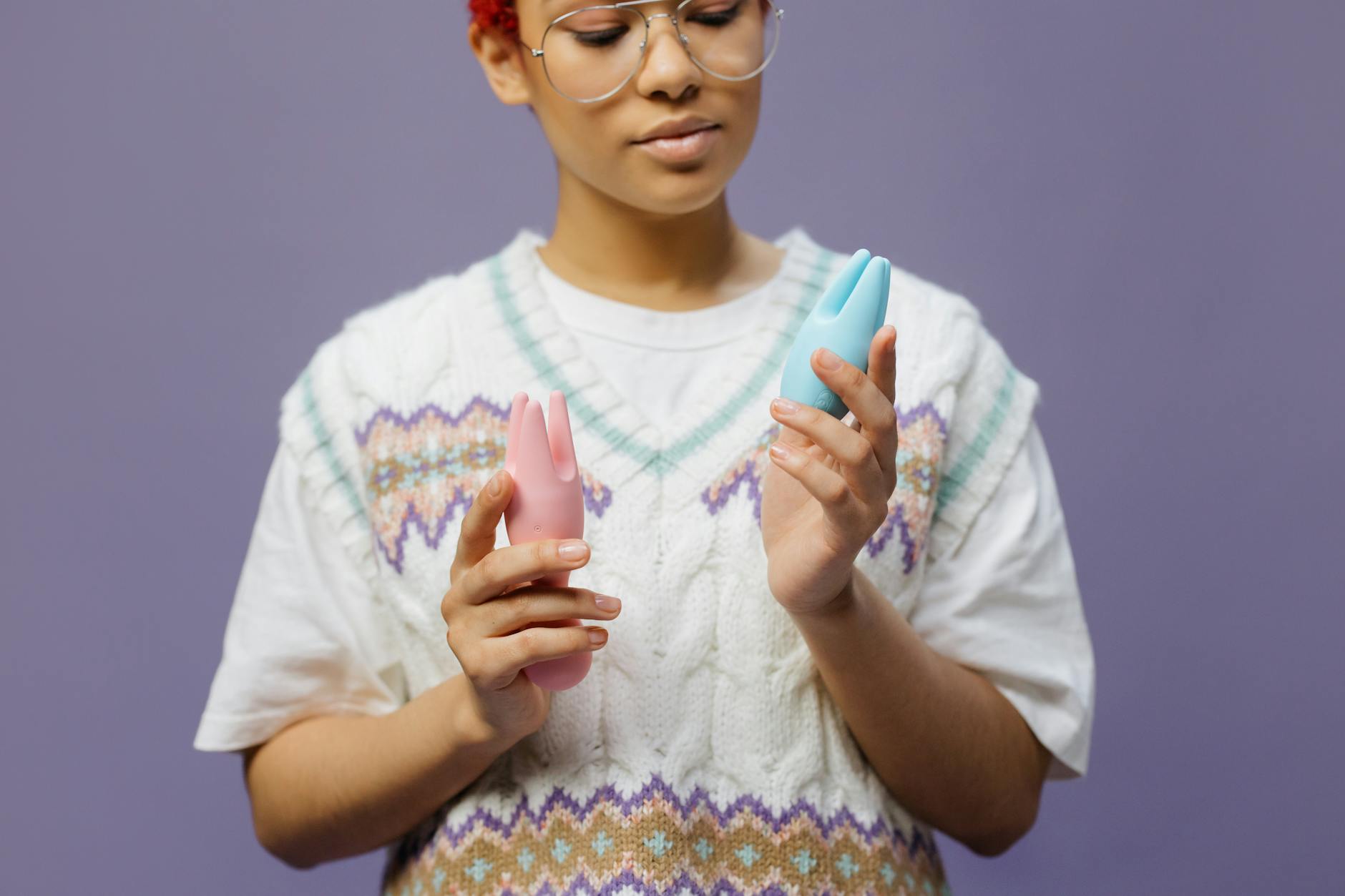
Photo by cottonbro studio on Pexels
Starting the conversation before you buy anything
Don't lead with the toy. Lead with your own pleasure. That changes the entire frame.
Instead of: "I want to buy a vibrator" try "I've been thinking about what actually gets me there reliably, and I want to explore that with you instead of alone."
That sentence does three things. It centers your pleasure (which matters). It positions your partner as a collaborator, not a backup. And it creates space for curiosity instead of defensiveness.
If your partner is a woman or someone with a vulva, talk specifically about clitoral stimulation. Many people grow up believing that penetration alone should be enough, and when it isn't, they internalize that as a personal failure. Reframing clitoral pleasure as a valid, normal part of partnered sex removes shame for everyone.
If your partner is a man or someone with a penis, the anxiety often centers on feeling like they're not enough. Get ahead of that directly: "Your hands, your body, and your attention are not interchangeable with a toy. A lemon vibrator adds something different, not something better. I want to feel this with you."
Both of those conversations are brief. They're not therapy. They're just clarity.
Introducing the actual lemon vibrator
Once the conversation has happened, the toy introduction becomes practical rather than loaded.
Show them the vibrator. Let them hold it. Let them ask questions. If they're curious about how it works, explain that lemon vibrators use gentle suction patterns rather than traditional vibration. Some people find that less intense, more targeted, and honestly more effective than older toy designs. The specificity matters because it shows you're not randomly trying things. You've thought about what might actually work.
Don't ambush. Don't surprise them in the moment. Don't expect immediate enthusiasm. Some partners need time to adjust to the idea. That's normal.
The first time you use it together, don't make it a production. You don't need to rebuild the entire bedroom or plan a special night (though you can if that feels right). You can introduce it during regular partnered sex as a simple addition. "Want to try this while we do this?"
Let them stay close. Let them see what's happening. For many partners, watching their partner experience different pleasure is actually arousing, not threatening. But only if there's no secrecy around it.
What to actually do with a lemon vibrator during partnered sex
There are several angles. Pick the one that matches your dynamic.
Option one: External use during penetration. You hold the lemon vibrator or your partner does while you're connected penetratively. This adds clitoral stimulation to something you're already doing together. Low stakes, clear benefit.
Option two: Foreplay intensifier. Use the lemon clitoral vibrator while your partner uses their hands or mouth elsewhere. You're both stimulating different areas simultaneously, building arousal together. This works well if penetration isn't the goal.
Option three: Mutual exploration. If your partner also has a vulva, take turns or explore together. Some couples find that using tools alongside each other removes the "one person doing, one person receiving" dynamic and creates something more mutual. This can deepen connection.
Option four: The solo-plus model. You use the vibrator while your partner is inside you or close to you, but not doing the stimulation. Some people find this works better because you're in full control of sensation and pace. Your partner stays engaged and close without needing to manage multiple things at once.
The framework changes based on what you're trying to create. Talk about which one appeals to you before you try anything.
When your partner resists (the real stuff)
Sometimes the conversation goes sideways. Your partner says something like "If you need a toy, I'm not doing enough" or "This makes me feel replaced" or "I don't want that in our bed."
Those are real feelings. They're also not automatically facts.
If your partner is expressing insecurity, here's what often helps: slow down, acknowledge the feeling, and separate the feeling from the behavior you're asking for. "I hear that this feels threatening. I don't want you to feel replaced. Here's what I actually want." Then be specific. "I want clitoral stimulation during sex. A lemon vibrator would help me get there. That doesn't mean I want you less."
If your partner is setting a hard boundary ("I don't want toys in our sex life"), that's different. That's a genuine difference in preference, and it requires a bigger conversation about compatibility. You can't want something your partner fundamentally doesn't want and have both of you feel good. Compromise here usually means one person resenting the other.
But that boundary is rare. What's more common is initial resistance that softens once the anxiety decreases and they actually see what using a lemon vibrator does for you. Pleasure is contagious. Watching someone you care about feel really good is usually enough to shift perspective.
If resistance persists and it matters to you, couples therapy is worthwhile. This is what a good relationship counselor does. They help translate anxiety into language and help both people understand what's underneath the reaction.
The first time is awkward. That's normal.
Expect some fumbling. Someone will probably drop it or forget which button does what. You might laugh. One of you might get distracted or lose focus. That's fine.
The goal isn't perfect porn-style sex. The goal is to move past the anxiety into actual experience. Once you've done it once, it's no longer theoretical. It's just another tool in your shared repertoire.
Many couples find that after the first time, the anxiety completely dissolves. It's not a big deal. It didn't wreck anything. In fact, it often leads to better communication and more enthusiasm across the board. Your partner sees you comfortable with your own pleasure, and that comfort is attractive.
People also ask
What if my partner wants to use the lemon vibrator on me but I'm nervous about that? Trust and pace matter here. Let them hold it first and just feel how it works. You control the intensity. Start with the lowest setting. You can always say "lighter" or "more to the left" or "pause." The beauty of a lemon clitoral vibrator is that you can feel exactly what's happening and redirect easily. If you're nervous about losing control, you're probably not ready for your partner to take over yet. That's okay. Solo practice with a lemon vibrator first often makes partnered use feel much safer.
How do I introduce this if we've never talked about pleasure before? Start with the conversation I outlined earlier. Don't skip straight to the toy. The conversation is the hard part, but it's also the part that actually fixes the anxiety. Once you've named what you want and why, the vibrator is just logistics.
Is using a lemon vibrator together better than using it alone? Not inherently. Some people prefer the intimacy of partnered use because they feel more connected. Other people like solo use because they have complete control. Some couples do both. There's no hierarchy. You're not "supposed" to use it with your partner. You're supposed to use it in whatever way actually feels good to you.
What if my partner uses the vibrator and it feels like competition? That feeling usually sits underneath another feeling, like "What if they don't need me anymore?" The actual tool isn't the issue. I'd recommend slowing down and exploring what that competitiveness is about. It might be worth talking through with a therapist or coach who specializes in couples work. This is exactly the kind of dynamic that benefits from a third-party perspective.
How do I know if my partner will actually enjoy using a lemon vibrator on me? You won't until you ask. But here's what I tell most couples: most partners actually love it. They love seeing you respond. They love feeling wanted enough that you're willing to be vulnerable. They love being let into something intimate. Anxiety makes it seem like they won't, but actual experience usually proves anxiety wrong.
Should I use a lemon vibrator during partnered sex every time? No. Use it when you want to. Some times you'll want penetration plus clitoral stimulation. Other times you'll want something else entirely. The vibrator is one option, not the only option. Variety is usually better than routine.
The actual point
Partner anxiety around lemon vibrators is really anxiety about whether your pleasure matters and whether it will change what you have together. It's worth taking seriously, but not by hiding the vibrator. By talking about it, explaining why it matters to you, and then actually trying it together. Most anxiety dissolves once it becomes real experience instead of scary speculation.
Your pleasure deserves presence, not secrecy. A good partnership makes space for that. If you want support navigating these conversations more deeply, reach out to Hello Nancy to discuss what would help.