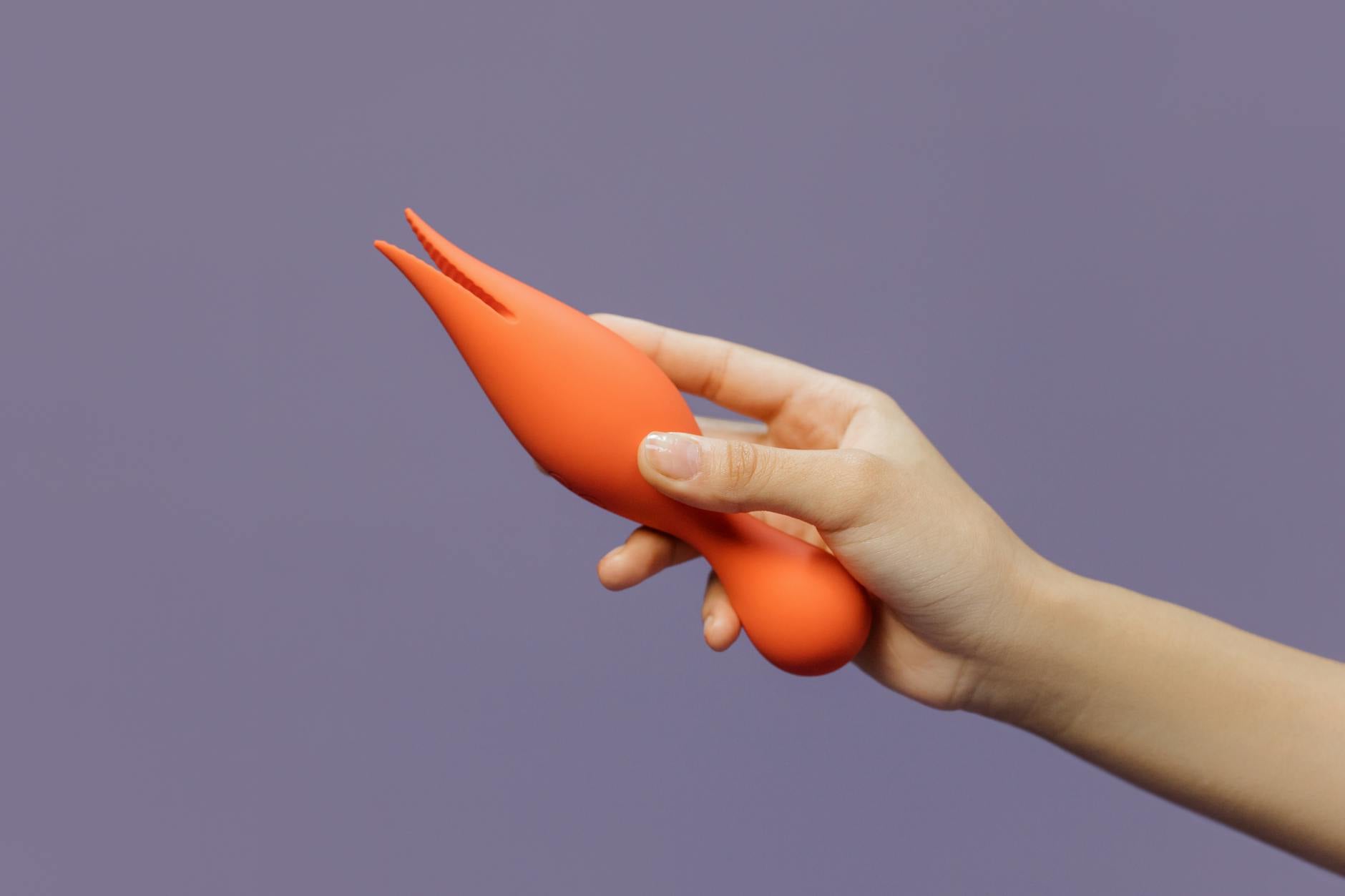
Let's name the problem first
One of you is aroused and ready. The other is... getting there. By the time the slower partner catches up, the faster partner has already peaked mentally, or worse, started feeling rejected. The slower partner feels rushed. Both of you end up frustrated, and nobody talks about it because it feels like a failure nobody caused.
Here's the thing: this is not a compatibility problem. It's a coordination problem. And a lemon vibrator, used intentionally, turns a source of tension into something that actually works for both of you.
Why arousal patterns clash in the first place
Arousal speed isn't about love or attraction. It's partly neurological (how quickly your nervous system shifts into a parasympathetic state), partly hormonal, partly contextual. One partner might get aroused from anticipation alone. The other needs sustained physical touch to build. One needs mental quiet to focus. The other gets more excited with noise and rhythm.
Add in different schedules, stress loads, and life roles, and you get two people operating on different timelines every single time you're intimate. The faster person feels impatient or lonely. The slower person feels pressured or inadequate. Both feel like they're doing something wrong.
They're not. They're just different.
What a clitoral vibrator actually does for this dynamic
A lemon vibrator, specifically, works because it's not a penetration tool. It's a direct clitoral stimulator. That matters because it compresses the time needed for arousal without forcing anything.
For the slower partner, it creates a bridge. Instead of waiting passively while your partner touches you, you've got consistent, calibrated sensation that your body recognizes immediately. No guessing if the pressure is right. No mental effort spent on communication. Your nervous system gets the signal it needs to shift into arousal mode.
For the faster partner, it removes the pressure to "do the work" solo. You're not standing there checking your watch or touching your partner in ways that don't match what they actually need. You're present, engaged, and your partner is responding to something that works, not something you're trying to make work.
How to introduce it without awkwardness
Don't frame it as a fix for a problem. Frame it as an upgrade for both of you.
Start outside the bedroom. "I read that clitoral vibrators actually help with arousal timing" is a conversation. "Something's wrong with how we do this" is an argument. The first one is just information. The second one is blame.