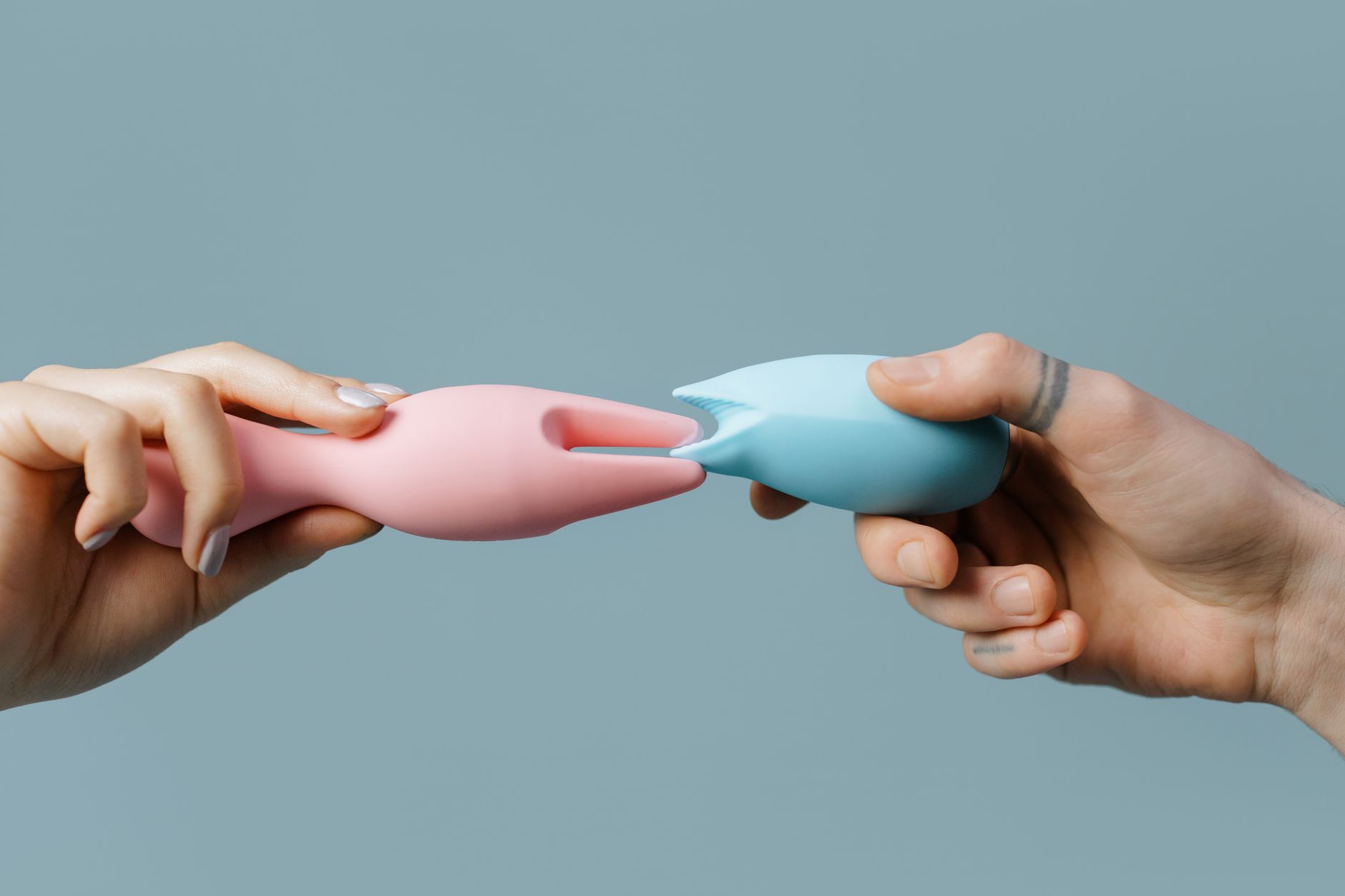
Here's the thing about mismatched sensitivity
One of you loves those intense, full-throttle sensations. The other winces if the vibration goes above a whisper. Welcome to one of the most common intimacy frustrations couples face, and honestly, it's completely fixable. The problem isn't your bodies or your desires. It's that you haven't yet found a tool and a rhythm that works for both of you.
A lemon vibrator, specifically its air-suction technology and multi-speed design, actually solves this better than most other toys. Here's why, and how to use it when you're poles apart on the sensitivity spectrum.
Why lemon vibrators work across sensitivity ranges
Most vibrators deliver the same stimulation quality across all speeds. Faster just means more of the same buzz. But a lemon clitoral vibrator works differently. The suction mechanism is gentler at lower speeds. You're not just turning up the volume. You're changing the entire sensation from a soft, pulsing pressure to something more intense and focused.
This matters for partners with different sensitivity because it means you can both use the same toy and get genuinely different experiences. Your partner on setting 2 isn't just getting a weaker version of what you get on setting 6. They're getting a completely different sensation profile.
Second, air-suction doesn't require direct contact the way traditional vibrators do. Someone with higher sensitivity can hold it at a slight distance or angle. Someone who likes intensity can press in closer. The toy accommodates both without needing two different devices.
The conversation you need to have first
Here's where most couples stumble. They skip the talk and jump straight to using the toy, then get frustrated when one person's squirming with pleasure and the other's uncomfortable.
Before you introduce a lemon vibrator into partnered sex, have a real conversation about sensitivity. Not during sex. Before. Ask your partner these specific things.
"What level of sensation makes you feel good. Setting 1, setting 3, setting 5." Get a number.
"What does too much feel like. Does it numb you out. Make you feel raw. Overstimulate you entirely." Understand the ceiling.
"Would you rather I control it or would you control it yourself." This is huge. It's not about ego. It's about who can communicate most clearly when something isn't working.
Write it down if you need to. This information is your guide.
Building arousal at different speeds
The mistake most couples make is assuming you have to stay in sync. You don't. Your arousal patterns don't need to match for great sex. What needs to match is mutual intention and communication.
Start with foreplay where you're touching your partner without the toy. One of you might be at a 4 on the arousal scale. The other might be at a 2. That's normal. The lemon vibrator isn't meant to erase that difference. It's meant to navigate it.
When you introduce the toy, start on the lowest setting. Not as a compromise where everyone's bored. Start there because you're reading each other's response. Your partner's breathing, their pelvic floor tension, whether they're pulling closer or creating distance.
If the lower settings work for both of you, stay there longer than you think you need to. If one person needs to move to a higher setting, that partner takes control of the toy at that point. This is collaborative, not simultaneous. One person guides the intensity while the other focuses on responding to pleasure.
Managing intensity escalation
Say you're at setting 3 and your highly sensitive partner is happy. You need setting 5. This is where most couples get stuck because it feels like someone's always being left behind.
One solution: alternate who controls the toy. You use it on your partner at their preferred setting for a few minutes. Then they use it on you at your preferred setting. This way, both people get their sensation needs met, and you're still building shared intimacy.
Another approach: one partner uses the lemon vibrator on themselves at their preferred setting while you focus on other kinds of touch with your partner. You're not both on the same page, but you're on the same team. Maybe you're inside them or they're touching you, and the toy is one layer of sensation, not the whole experience.
The key is not treating different sensitivity as a problem to solve in the moment. Treat it as information to work with.
The pacing rhythm that actually works
Here's a pattern that my clients report works consistently across sensitivity differences.
Start foreplay without the toy. Spend 10-15 minutes on this. No pressure to escalate. Touch, kiss, talk. Get both partners to about a 6 on the arousal scale if possible. This baseline matters because arousal itself changes sensitivity. You can tolerate higher intensity when you're already turned on.
Introduce the lemon vibrator at the lower partner's preferred setting. Not the highest either of you wants. Start at the lower-sensitivity person's baseline. Spend 3-5 minutes here. Check in nonverbally. Is their breathing deepening. Are they opening up or tensing.
If both partners are happy, stay here. If the higher-sensitivity person is getting bored, they can take the toy and use it on themselves at their preferred setting while the other partner continues with hands, mouth, or penetration if that's part of your sex life.
Don't make it a production. This is normal partnered sex with a tool. It works because you're responding to each other, not rigidly following a script.
Common friction points and how to handle them
One partner might say, "I can't come if you're doing something different than me." This usually means they need more mental focus or consistency to reach orgasm. Solution: they take full control of the toy's speed and placement while you provide other stimulation or closeness.
Another partner might feel sidelined if one person is using the toy on themselves. The antidote is communication before it becomes resentment. "I love watching you pleasure yourself. I also want to feel close." Then figure out touch that works. Hands, mouth, bodies in contact.
Some couples find that sensitivity differences highlight a larger dynamic. One person feels like they're always accommodating the other. That's not a toy problem. That's a relationship dynamic worth exploring, possibly with a therapist.
But mostly, sensitivity differences are just logistics. You solve them the same way you solve any logistics in a partnership. Information, intention, and adjustment.
When to use a lemon vibrator versus other tools
A lemon vibrator works best for this scenario because it's controllable, has a wide range of intensities, and the sensation changes meaningfully across settings. But it's not the only tool.
Some couples find that having two different toys actually reduces pressure. One partner uses a lemon clitoral vibrator. The other uses something gentler, like a panty vibrator or a wand at its quietest setting. You're not trying to share one device. You're each using what works for you while maintaining physical connection.
If that appeals to you, that's completely valid. The point isn't to force yourself into one toy. The point is pleasure without resentment.
The longer-term shift
Here's something that happens when couples actually address sensitivity differences instead of ignoring them. Over time, the person with lower sensitivity often develops higher tolerance and capacity. Not because they're forcing it. But because they're relaxed enough to explore it without pressure.
Sensitivity isn't fixed. It changes with stress, hormones, how connected you feel to your partner, how much you're in your head versus your body. Using a lemon vibrator together, communicating clearly, and letting each person have their experience actually creates conditions for that sensitivity to shift naturally.
You don't have to become the same. You just have to stop treating different as difficult.
FAQs
Can we use the same lemon vibrator if we have different sensitivity levels?
Absolutely. That's actually where a lemon clitoral vibrator shines. The multi-speed design means the lower-sensitivity partner can use a higher setting while the more sensitive partner stays on a lower setting. You're getting genuinely different sensations from the same tool. Take turns controlling the speed, or one partner can use it on themselves while the other provides other touch.
What if one of us can't come unless we're doing the same thing at the same intensity?
That usually signals something about focus or mental state during sex. Some people need consistency and predictability to reach orgasm. Solution: they control the toy's speed while you provide other stimulation. Or you both use your preferred settings but stay physically close or maintain eye contact to preserve the sense of togetherness. The goal isn't always to be perfectly synchronized.
Is it normal for my partner to want such a higher intensity than me?
Completely normal. Sensitivity varies by genetics, hormones, past sexual experience, stress levels, and how much you trust your partner. It's not a sign of anything wrong with either of you. Different bodies just work differently. A lemon sucker like the Lem is designed to handle this range, so you have options beyond "one person waits while the other finishes."
How do we avoid one partner feeling left out or resentful about the sensitivity difference?
Talk about it outside the bedroom first. Acknowledge that you have different needs and that's okay. Then build in moments where each person gets attention at their preferred intensity. Maybe you alternate who gets the vibrator, or one person uses it while the other is doing something they enjoy. Make it collaborative, not competitive.
Does sensitivity change over time in a relationship?
Yes. Hormones shift. Stress increases or decreases. How connected you feel to your partner affects your capacity for sensation. Some couples find that sensitivity differences actually narrow as they get more comfortable with each other and better at communicating during sex. Using tools like a lemon vibrator together can actually help that process.
What if the lower-sensitivity partner feels pressured to use higher intensities?
That's a red flag worth addressing. Your body's signals matter more than trying to match your partner's preferences. If someone's pushing you toward sensation you don't want, that's not about the toy. That's about consent and respect. A good partner would rather use the vibrator at your comfortable level than pressure you into something that doesn't feel good.
The real difference
Using a lemon vibrator with different sensitivity levels isn't about erasing your differences. It's about building a sex life where both people actually enjoy themselves instead of one person tolerating and the other wishing for more. That shift alone changes what's possible in your intimacy.
If you're navigating this in your relationship, start with that conversation. Get specific. Then let the tool do what it's designed to do: give you options. Your pleasure doesn't have to look the same for it to be real.