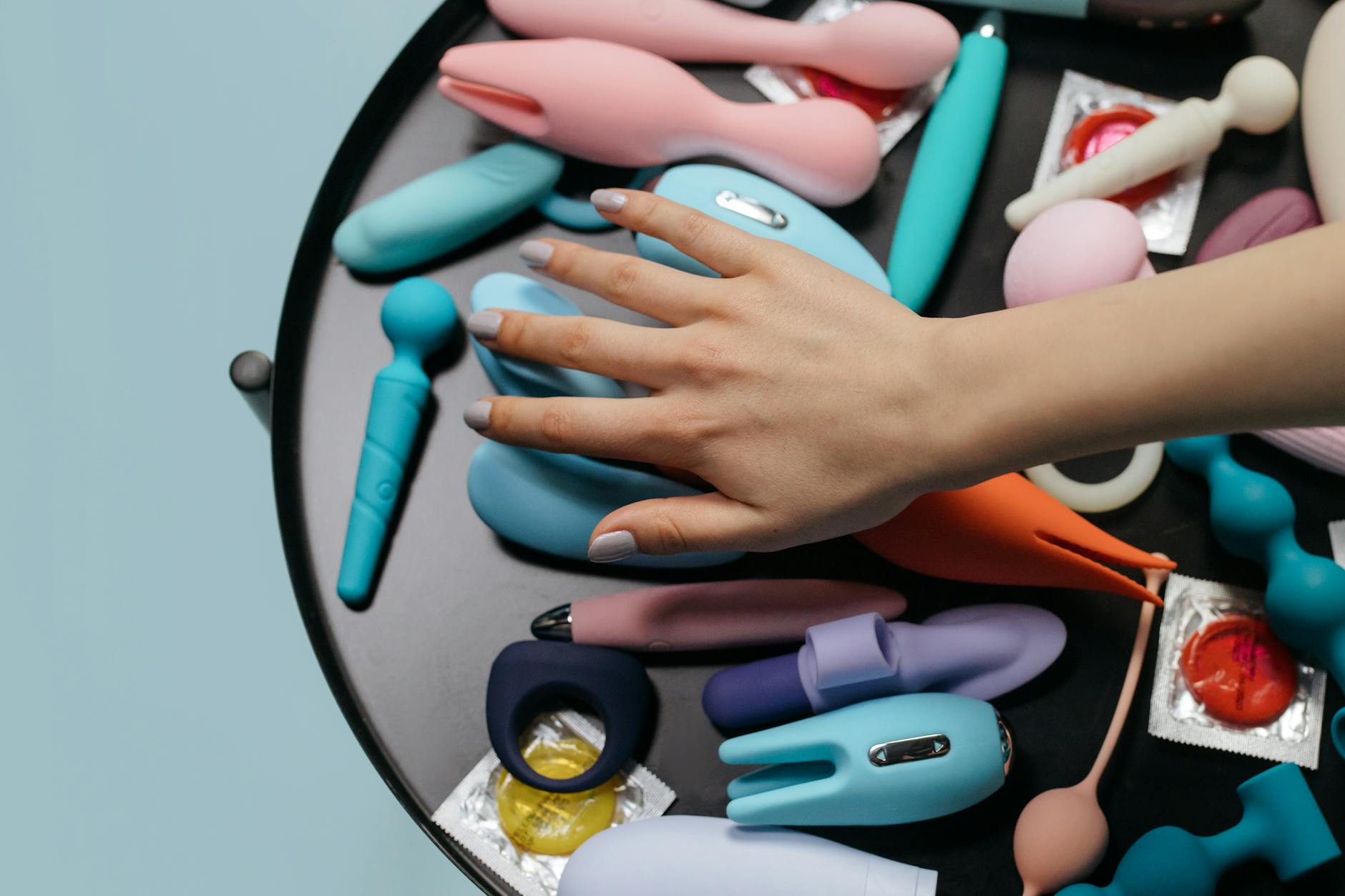
Here's the thing about anxiety and first-time toys
Most people think the problem is the toy itself. It's not. The problem is that standard vibrators deliver a very specific sensory signal to your nervous system, and if you're already activated by anticipation, novelty, or self-consciousness, that signal can feel overwhelming before you've even turned it on.
A lemon vibrator works differently. Not better, necessarily. Just differently. And for anxious first-time users, that difference matters.
Why vibration can feel too intense for anxious nervous systems
When you're nervous, your nervous system is already primed. Your pelvic floor muscles are tight. Your brain is split between what's happening in your body and what you're worried might happen next. A traditional vibrator adds a high-frequency stimulus on top of that already-activated state. It's like trying to meditate while someone's tapping a pen on the desk.
You're not broken. Your nervous system is doing exactly what nervous systems do: protect you. Vibration reads as a kind of alertness signal. Air-suction, by contrast, feels more like pressure and rhythm. It's gentler on an already-heightened nervous system because it doesn't add that jittery, buzzing frequency.
Research on sensory processing in people with anxiety shows that perceived control matters wildly. Vibration happens at a fixed frequency you can't really modulate once the toy is on. Suction-based toys like a lemon vibrator create a different sensation architecture: you control the pace, the pattern changes more organically, and there's less of that "oh god it's so intense" moment.
How a lemon clitoral vibrator is actually built differently
A lemon vibrator (sometimes called a suction vibrator or air-pulse vibrator) uses gentle suction and pulsing air patterns instead of the traditional motorized buzz. Think of it like the difference between someone tapping your shoulder repeatedly and someone softly squeezing your arm.
The Lem by Hello Nancy, for example, uses air-pulse technology. It creates waves of suction around the clitoris rather than direct vibration against the tissue. This means:
- Lower perceived intensity early on. You can start at pattern 1 without it feeling like the toy is demanding something from your body.
- More modulation. Air-pulse patterns vary naturally, which feels less monotonous and gives your nervous system something to anticipate rather than dread.
- Gentler tissue contact. There's no direct motor vibration against sensitive tissue. The sensation is contained and indirect.
- Easier to pause or adjust. You're not working against a locked-in frequency.
For someone with anxiety, that architecture difference translates into something huge: you feel like you have more control.
Why control is actually the biggest factor
Anxiety thrives in uncertainty. Your brain keeps asking "What if I don't like this? What if nothing happens? What if it's weird?" The more variables you can control, the quieter that chatter gets.
With a lemon sexual toy, you're not locked into someone else's design philosophy about what intensity should feel like. You start at the lowest setting, which genuinely feels manageable. You can explore the patterns one at a time. You can turn it off whenever you want without guilt (because you literally just reduce pressure on a button, not a full "I'm stopping").
This matters because anxious first-time users often sabotage themselves. They turn on a standard vibrator, feel overwhelmed by the intensity, and assume they're not "built for" toys. What actually happened is the toy was built for someone with a calm nervous system.
A lemon vibrator lets you meet yourself where you are.
The pelvic floor-anxiety connection
Here's something most articles won't tell you: anxiety and pelvic floor tension are a feedback loop. When you're nervous, you clench your pelvic floor (that's your body protecting itself). When your pelvic floor is clenched, sensation becomes duller, which makes you more anxious that something's wrong, which makes you clench harder.
It's a vicious cycle. And a high-frequency vibrator can make it worse because you're adding stimulation to an already-tensed system.
Air-pulse toys like a lemon clitoral vibrator work with that tension rather than against it. The pulsing sensation actually encourages the pelvic floor to relax and engage rhythmically instead of staying locked. You're not trying to override tension with intensity. You're gently encouraging your body to move.
Building confidence through micro-wins
Anxious first-time users need to experience small, genuine wins. Not "I had an amazing orgasm" (which sets the bar impossibly high). Just "I felt something good. I did that on purpose. I can do it again."
A lemon vibrator is scaffolded for that. You pick a pattern. You explore it for two minutes. You either like it or you don't. No judgment, no failure. Then you try the next pattern. Each interaction is small enough to be manageable but real enough to build confidence.
Most anxious people who use a lem vibrator for the first time report surprise at how quickly their nervous system relaxed. They expected it to be scary or awkward. Instead, it felt kind of nice. And nice, delivered in a low-key way, is exactly what anxiety needs to begin loosening its grip.
What to actually do the first time
If anxiety is your thing, here's the practical path:
Environment matters. Lock the door. Put your phone away. You need to know you're not going to be interrupted because that's what your anxious brain is waiting for.
Start at the lowest setting. Not for safety. For your nervous system. Lemon vibrators are designed so that setting 1 feels genuinely gentle. Spend time there. Five minutes, ten minutes. Let your body acclimate.
Don't have a goal. Seriously. The moment you add "and then I need to orgasm," you've handed control back to anxiety. You're just exploring sensation. That's the entire win.
Breathe. If you notice you're holding your breath, that's anxiety. Exhale slowly. Your pelvic floor will follow your breath. Tight breath equals tight pelvic floor. Slow breath equals relaxation.
Quit before you feel like you need to. When you're done exploring, stop. You want the experience to end on a positive note, not when you're frustrated. This teaches your nervous system: "This is safe and within my control."
The science of incremental exposure
What you're actually doing when you use a lemon vibrator anxiously and carefully is exposure therapy. You're proving to your nervous system that novelty can be safe. That your body can feel pleasure. That you're in control.
Exposure therapy works because it rewires your threat-detection system. The first time you try a lemon sexual toy, your brain codes it as a mild threat (new, unknown, activating). By the fifth time, you've gathered data that suggests it's actually safe. Your nervous system relaxes. Pleasure becomes possible.
This is why therapists recommend air-pulse toys specifically for clients with sexual anxiety. It's not magic. It's architecture. The toy is literally designed in a way that makes anxiety less likely to spike.
When to involve a partner (and when not to)
If you're in a relationship and considering a lemon clitoral vibrator, here's what I tell couples: use it alone first. Not because partnered use isn't great (it is). But because your first experience should be entirely about your nervous system learning safety.
Once you've spent time with it solo and your anxiety has softened, then bring your partner in. By then, you know it's not scary. You can show them what you like. You're in control of the narrative.
Partners often want to help, which is sweet. But anxious brains interpret another person in the room as adding witnesses, adding pressure, adding variables you can't control. Solo first. Then partnered if you want.
When it's not just anxiety
If you've tried a lemon vibrator a few times and anxiety is still preventing pleasure, it might not be the toy at all. Sometimes anxiety around sexuality is connected to deeper stuff. Past experiences, relationship dynamics, body image, trauma.
That's not a toy problem. That's a therapy problem. A good therapist, especially one trained in sex therapy or somatic work, can help untangle what's underneath. A lemon clitoral vibrator is a tool, not a cure. But it's an excellent starting point because it removes the sensory overwhelm variable from the equation.
FAQ
Why do air-pulse toys feel less intense than regular vibrators?
Air-pulse technology (like you find in a lemon vibrator) creates pressure waves instead of rapid motorized vibration. Your nervous system perceives pressure as gentler than vibration, especially if you're already activated by anxiety. The sensation is also more dispersed, which means there's no single point of intense stimulus.
Can anxiety actually prevent orgasm?
Yes, completely. Orgasm requires relaxation at a nervous system level. When you're in a state of vigilance or threat-detection, your body literally cannot access the parasympathetic calm needed for climax. A lem vibrator helps by reducing the sensory threat, which allows relaxation to happen. Sometimes just the right tool changes everything.
Is it normal to feel overwhelmed by vibrators when you have anxiety?
Completely normal. High-frequency vibration activates the same sympathetic nervous system (fight-or-flight) that's already running in people with anxiety. You're not broken or too sensitive. You just have a nervous system that prefers a different type of input. A lemon sexual toy is built for that preference.
How long should I wait before using a toy with my partner?
I usually suggest spending at least a few solo sessions with a toy before introducing it in partnered sex. This gives your nervous system time to code it as safe. Then when your partner is involved, you already know it's okay. You're not discovering safety and navigating another person at the same time.
Do I need to see a therapist before trying a lemon clitoral vibrator?
Not necessarily. If anxiety is mild to moderate and fairly specific to the novelty of toys, exploration with the right tool can actually be therapeutic. You're gathering evidence that your body is safe. But if anxiety is severe or rooted in trauma, a therapist should be in the conversation. They can give you strategies to pair with the toy.
What's the difference between this and a regular vibrator?
The main difference is the sensory signal. Vibrators send high-frequency buzz. Air-pulse toys like a lemon vibrator send rhythmic suction and pressure. For anxious nervous systems, the latter feels more manageable. You're not adding a jittery frequency to an already-activated state. You're adding gentle pressure and rhythm, which the nervous system codes as calming rather than activating.
If you're anxious about pleasure, you're not broken. You just need tools designed with your nervous system in mind. A lemon vibrator is one of those tools. It's not a magic fix, but it's a genuinely thoughtful design choice for anxious first-time users.
Ready to explore? The best first step is the one that feels safest to you. That might be a Hello Nancy lemon sexual toy. It might be talking to a therapist first. Both are valid. The goal is to prove to yourself that your body can feel good. Everything else follows from that.